
Stockbridge Damper
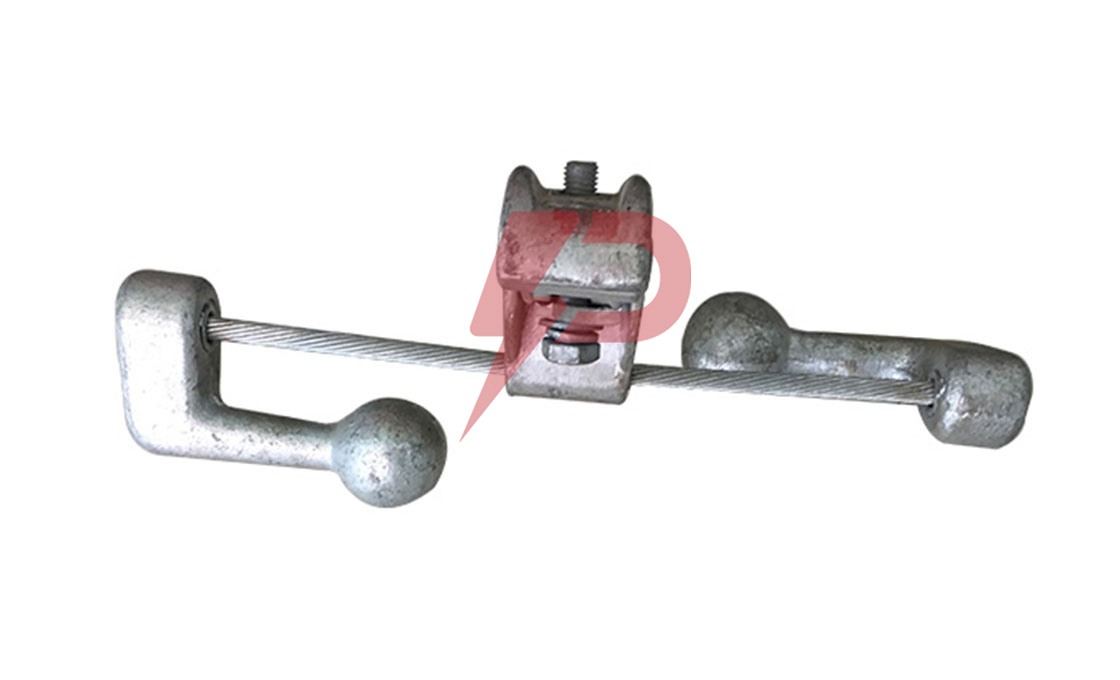
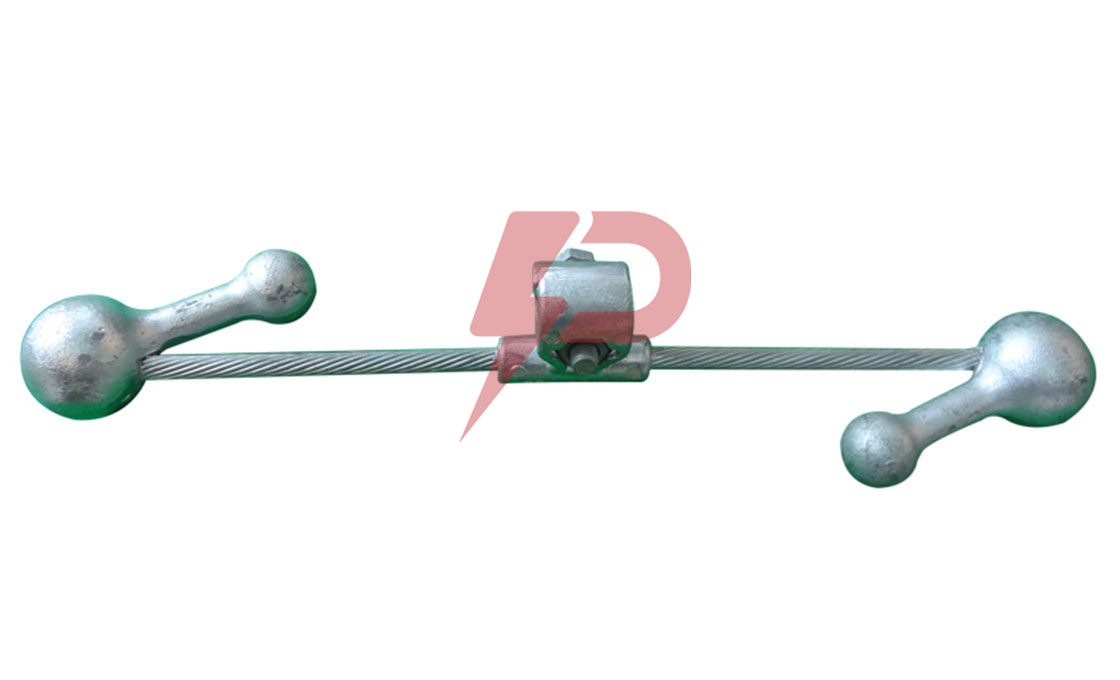
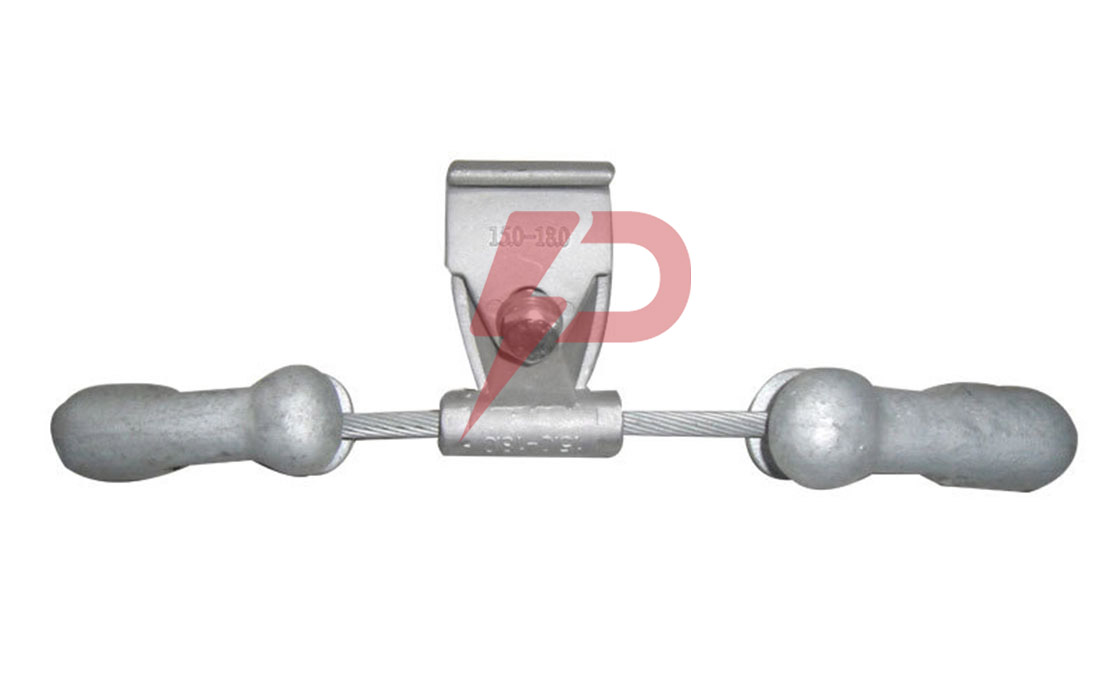
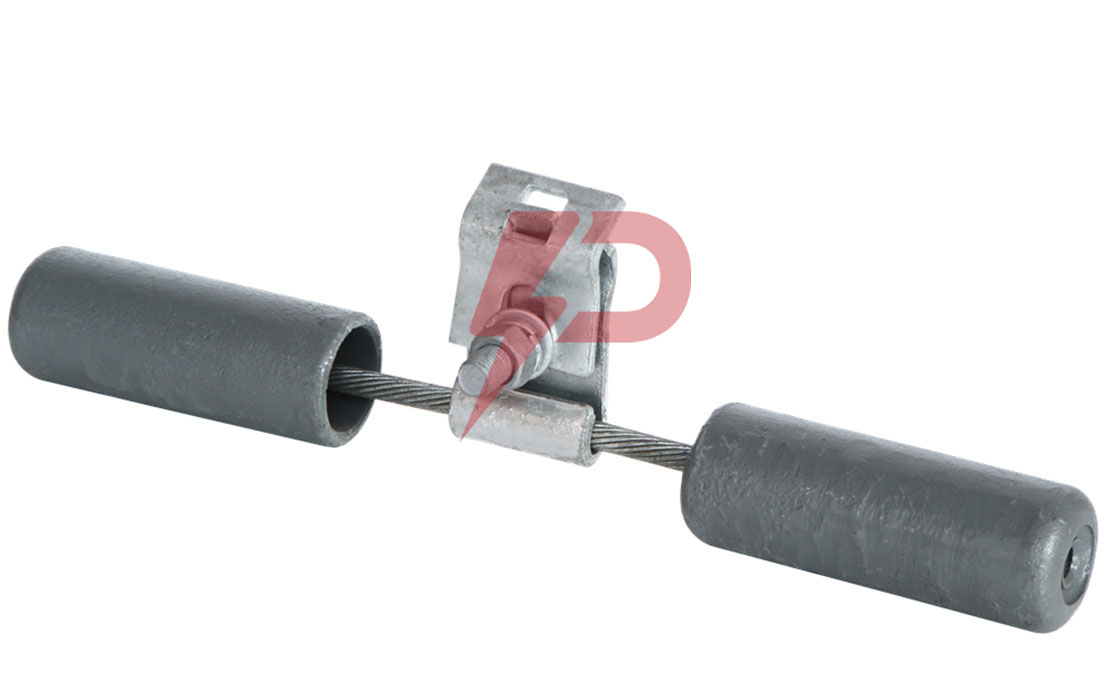
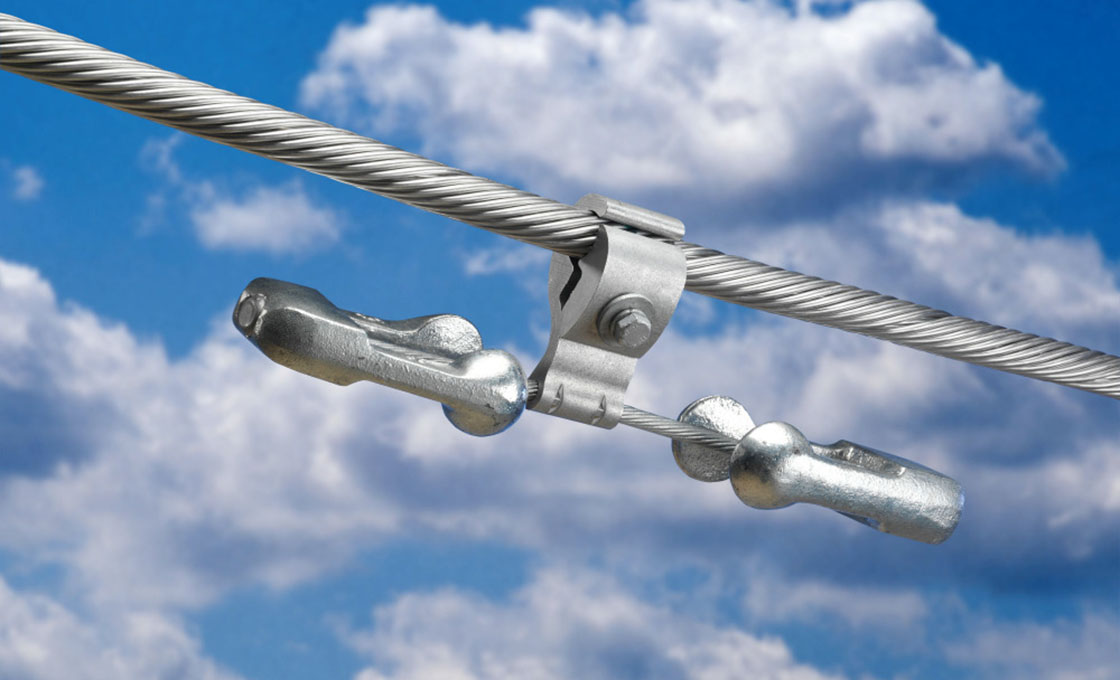
The Stockbridge damper, also known as a dog bone damper, is a tuned mass damper designed to suppress wind-induced vibrations on overhead transmission lines. It consists of two unequal masses attached to unequal lengths of stranded messenger cables, connected by a central aluminum alloy clamp to the main conductor. The Stockbridge damper effectively prevents fatigue damage by converting wind-induced energy into heat through its unique four-resonance (4-R) system, which provides wider frequency coverage than traditional designs.
The Stockbridge damper is compatible with various conductor types including ACSR, ACSS, AAC, and AAAC, operating effectively at temperatures up to 250°C. Its asymmetric design features bell-shaped weights with smooth contours that enable corona performance up to 500 kV. Installation is straightforward using the bolted clamp system, requiring minimal tools and maintenance while ensuring consistent performance across diverse weather conditions. In Rax Industry, FD, FR, FDT, FDZ, DBYJ, FRYJ Models are available.
Key Features:
– Four natural frequency response modes for optimal vibration suppression
– Special 19-strand messenger cable for efficient energy dissipation
– Corrosion-resistant finish with rounded edges to eliminate corona discharge
– Quick and easy installation with aluminum clamping bolt system
– Durable performance in temperatures up to 250°C
– Wide conductor compatibility range from 36.2mm to 46.3mm diameter

Stockbridge Damper Drawing
| Dog bone type damper model | Applicable wire diameter range | Applicable wire specifications | Tuning fork damper model | Weight(kg) | weight(kg) | ||
| (mm) | ACSR | Aluminum stranded wire | Steel strand wire | ||||
| FDB-1Y01 | 7.6~8.79 | LGJ-35/6 | LJ-35 | GJ-35 | FR-2Y01 | 1.55 | 1.3 |
| FDB-1Y02 | 8.8~10.09 | LGJ-50/8 | LJ-50 | GJ-50 | FR-2Y02 | 1.55 | 1.3 |
| FDB-1Y03 | 10.1~11.49 | LGJ-70/10 | LJ-70 | GJ-70 | FR-2Y03 | 1.55 | 1.3 |
| FDB-2Y04 | 11.5~13.1 | LGJ-50/30 | LJ-95 | GJ-100 | FR-2Y04 | 1.55 | 1.5 |
| FDB-2Y05 | 13.11~13.99 | LGJ-70/40 | FR-2Y05 | 1.55 | 1.5 | ||
| LGJ-95/20 | |||||||
| FDB-2Y06 | 14.0~14.81 | LGJ-120/7 | LJ-120 | FR-3Y06 | 2.1 | 1.5 | |
| FDB-3Y07 | 14.81~16.6 | LGJ-95/55 | LJ-150 | FR-3Y07 | 2.1 | 1.8 | |
| LGJ-120/25 | |||||||
| LGJ-150/8 | |||||||
| FDB-3Y08 | 16.61~18.0 | LGJ-120/70 | LJ-185 | FR-3Y08 | 2.1 | 1.8 | |
| LGJ-150/25 | |||||||
| LGJ-150/35 | |||||||
| LGJ-185/10 | |||||||
| FDB-4Y09 | 18.0~20.2 | LGJ-185/25 | LJ-210LJ-240 | FR-4Y09FR-5Y09 | 2.5 | 2.5 | |
| LGJ-185/30 | |||||||
| LGJ-185/45 | |||||||
| LGJ-210/25 | |||||||
| FDB-4Y10 | 20.21~22.6 | LGJ-210/35 | LJ-300 | FR-4Y10FR-5Y10 | 2.5 | ||
| LGJ-210/50 | |||||||
| LGJ-240/30 | |||||||
| LGJ-240/40 | |||||||
| LGJ-240/55 | |||||||
| FDB-5Y11 | 22.61~25.2 | LGJ-300/15 | FR-5Y11 | 3.2 | |||
| LGJ-300/25 | |||||||
| LGJ-300/40 | |||||||
| LGJ-300/70 | |||||||
| FDB-6Y12 | 25.21~28.0 | LGJ-400/20 | LJ-400 | FR-5Y12 | 4.6 | ||
| LGJ-400/35 | |||||||
| LGJ-400/65 | |||||||
| FDB-6Y13 | 28.0~30.0 | LGJ-500/35 | LJ-500 | FR-6Y13 | 4.6 | ||
| LGJ-500/45 | |||||||
| FDB-7Y14 | 30.01~32.0 | LGJ-500/65 | FR-6Y14 | 4.6 | |||
| FDB-7Y15 | 32.01~34.0 | LGJ-630/45 | LJ-630 | FR-7Y15 | 6.8 | ||

Frequently Asked Questions (FAQ)
How does a Stockbridge Damper work?
The damper operates through two natural frequency modes called ‘flying’ and ‘wiggling’. When wind causes cable vibration, the damper’s weights oscillate, and the messenger cable flexes, dissipating energy through heat created by internal friction between the cable strands.
What frequency range does a Stockbridge Damper target?
Stockbridge dampers specifically target aeolian vibrations with frequencies between 3-150 Hz and amplitudes of millimeters to centimeters. These vibrations occur in the vertical plane and are caused by alternating vortex shedding on the leeward side of the cable.
How are modern Stockbridge Dampers different from original designs?
Modern Stockbridge dampers use metal bell-shaped weights instead of concrete blocks and feature asymmetric mass distribution. This design enables multiple frequency modes and ranges, doubling the number of resonant peaks from two to four for better protection.
Where should Stockbridge Dampers be installed?
Dampers are typically installed at the nearest anti-nodes on either side of the insulator clamp, with two dampers per span. For the 1700AA series, the damper can be installed with either the large or small weight facing the structure.
What makes Stockbridge Dampers effective for power lines?
Stockbridge dampers prevent fatigue damage by controlling vibrations within internationally accepted limits, maintaining damping capacity across all temperatures, remaining corona-free at maximum voltage, and requiring no maintenance throughout the line’s lifespan.
How are Stockbridge Dampers installed?
Installation requires positioning the damper at specified distances from structure attachment points, loosening the bolt for cable entry, hanging the damper on the conductor, and tightening to recommended torque values or until the breakaway head shears off.
What types of oscillations affect power lines?
Power lines experience three major oscillation types: gallop (0.08-3 Hz, meter amplitude), aeolian vibration (3-150 Hz, millimeter-centimeter amplitude), and wake-induced vibration (0.15-10 Hz, centimeter amplitude). Stockbridge dampers primarily address aeolian vibrations.